
“ सेवा, सुरक्षा और समाधान ”
“ सेवा, सुरक्षा और समाधान ”
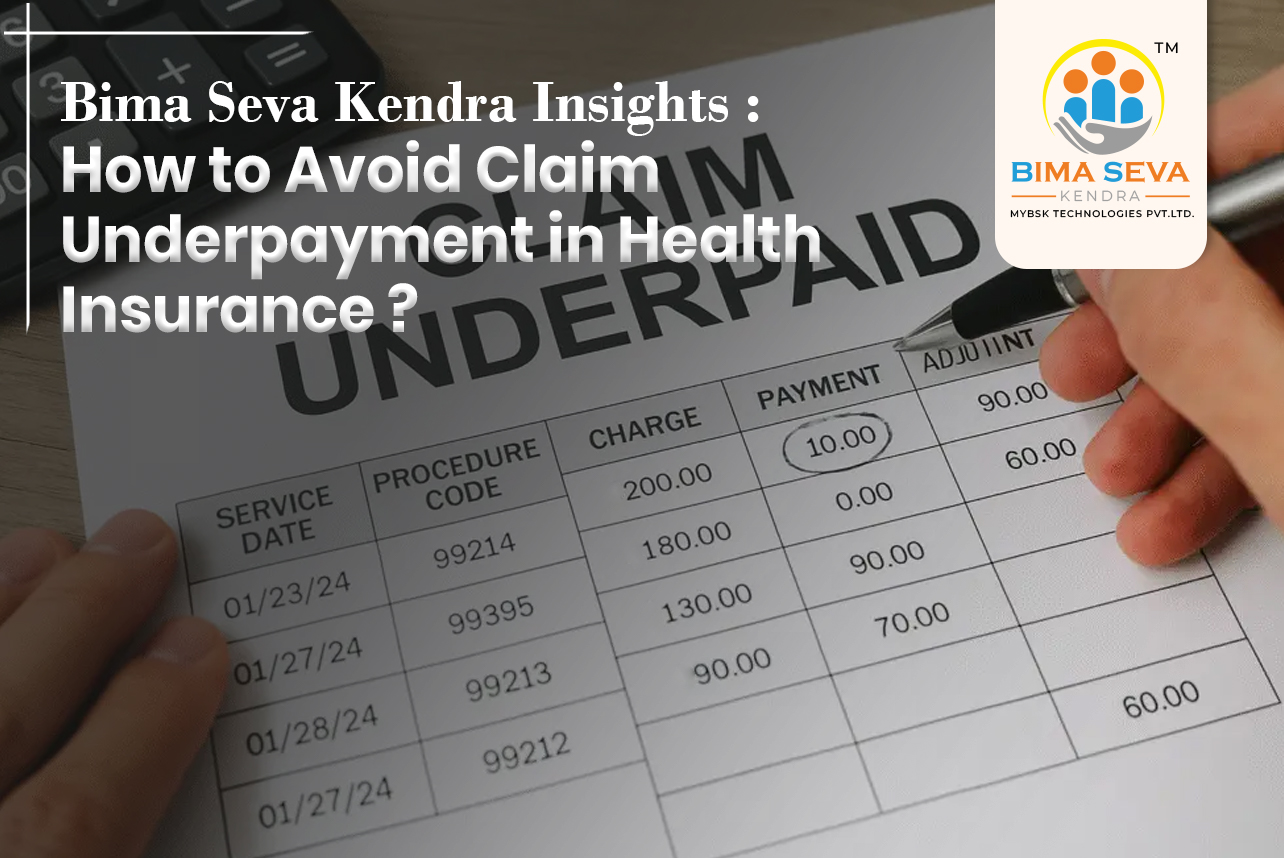
Bima Seva Kendra Insights: How to Avoid Claim Underpayment in Health Insurance
What is a Short Settlement? Is it just a settlement amount that feels lower than the hospital bill or anticipated coverage?
No.
For families already managing medical expenses, health emergencies, family, business, jobs, kids, elders, THEMSELVES… this situation is a nightmare.
The encouraging news is that most instances of claim underpayment can be prevented — or corrected — when policyholders understand the common triggers behind them.
Based on real-world experience handling claim rejection-related issues and over 1500 settlement disputes, here are some practical insights from Bima Seva Kendra that can help policyholders protect their claims.
A. Understanding What Claim Underpayment Really Means
Claim underpayment/short settlement occurs when the insurer approves the claim but reimburses only a portion of the claimed amount.
This can happen for several legitimate reasons, including:
- Policy sub-limits on specific treatments
- Room rent restrictions
- Non-medical expenses being excluded from coverage
- Co-payment clauses
- Deductibles applied to the claim
However, confusion often arises because these details are not always clearly understood at the time of hospitalisation.
What appears to be an unexpected shortfall may actually be a policy condition — or in some situations, a preventable documentation or communication issue that later develops into broader insurance claim-related issues.
➢ Insight 1: Room Rent Limits Can Affect the Entire Claim
One of the most common and least understood causes of underpayment involves room rent limits.
Many policies specify a maximum daily room rent. When a patient selects a room exceeding that limit, the insurer may proportionally reduce payments across multiple hospital charges — not just the room cost.
This can significantly reduce the final settlement amount.
For example:
- A policy allows a room rent of ₹3,000 per day
- The patient chooses a room costing ₹5,000 per day
- Other treatment charges may be adjusted proportionally
Understanding this rule in advance can prevent unexpected reductions and avoid prolonged Delay in claim process due to billing adjustments.
➢ Insight 2: Non-Medical Expenses Are Often Not Covered
Hospital bills frequently include items that fall outside insurance coverage.
These may include:
- Registration charges
- Administrative fees
- Consumables
- Personal comfort items
- Service charges
While these expenses are part of the hospital bill, they may not qualify for reimbursement under the policy.
When policyholders are unaware of these exclusions, the difference between billed and paid amounts can feel like underpayment — sometimes leading to a Complaint about Insurance company even when the settlement follows policy terms.
Clear communication and understanding of the policy can help identify such costs early.
➢ Insight 3: Pre-Authorisation Details Matter More Than People Realise
For cashless claims, the pre-authorisation request submitted by the hospital plays a critical role in determining the approved amount.
If the estimated treatment cost is incomplete or inaccurate, the insurer may initially approve a lower amount, leading to partial settlement later. Moreover, if there are changes made during the treatment, even if medically necessary, it can result in additional verification, extended communication, and claim rejection-related issues.
Ensuring that the hospital provides detailed and accurate information during pre-authorisation can significantly reduce the risk of underpayment.
➢ Insight 4: Policy Terms Change Over Time
Many policyholders renew their insurance year after year without reviewing updated policy conditions. While insurers cannot make unilateral, individual changes without notification, they can adjust rates based on age, claims history, or updated product terms approved by regulatory bodies.
These changes may affect:
- Treatment eligibility
- Coverage limits
- Waiting periods
- Reimbursement percentages
A lack of awareness about the details of these revised terms can lead to unexpected settlement differences and prolonged insurance claim-related issues during hospitalisation.
Reviewing the policy frequently can help prevent such surprises.
➢ Insight 5: Documentation Gaps Can Reduce Settlement Amounts
Incomplete or inconsistent documentation is another frequent cause of claim underpayment.
Examples include:
- Missing prescriptions
- Incomplete summaries
- Unclear medical diagnosis details
- Mismatch between treatment records and billing
When documentation does not fully support the claimed expenses, insurers may approve only a portion of the claim that they can verify in the documents.
In more complex cases, documentation gaps can escalate into formal claim rejection or extended Delay in claim process. Maintaining accurate records throughout treatment helps ensure that the claim reflects the full scope of medical care provided.
B. Warning Signs of Possible Claim Underpayment
Recognising warning signs early can help policyholders take corrective action before settlement is finalised.
Some indicators include:
- The approved amount being significantly lower than the estimated cost
- Repeated requests for additional documents
- Unexplained deductions in the claim summary
- Delayed communication regarding settlement details
Addressing these signals promptly can prevent small discrepancies from developing into larger claim rejection-related issues.
C. When Clarification or Review Becomes Necessary
Sometimes, despite careful preparation, settlement amounts may still appear inconsistent with expectations. In such situations, professional review can help determine whether the reduction is justified under policy terms or whether further clarification is required.
Bima Seva Kendra’s experienced teams handling claim rejection services often assist by:
- Examining policy clauses and settlement summaries
- Identifying calculation errors or documentation gaps
- Communicating with insurers for clarification
- Addressing unresolved insurance claim-related issues
Our role is not to challenge the system the loudest, but to negotiate with it the smartest to ensure that policyholders receive fair and accurate settlements.
A Simple Checklist to Reduce the Risk of Claim Underpayment
| Step | Why It Matters |
| Check room rent eligibility before admission. | Prevents proportional deductions. |
| Review policy coverage annually. | Avoids surprises during treatment. |
| Confirm pre-authorisation details. | Ensures accurate claim approval. |
| Keep all medical documents organised. | Supports full reimbursement. |
| Understand excluded expenses. | Reduces confusion about claim settlement. |
| Seek clarification early. | Prevents escalation into claim rejection-related issues. |
Final Thought
Health insurance, like any structured system, works best when policyholders understand the rules clearly and are on the same page with the providers.
Claim underpayment is never random. In most cases, it results from the small details that go unnoticed until the final settlement arrives.
With awareness, preparation, and timely communication, many of these challenges can be avoided — ensuring that the claim process remains predictable, transparent, and aligned with expectations.
© 2026 MYBSK All Rights Reserved. Designed By SKALY INFOTECH PVT.LTD.